
Romans
Part 01: An Overview
By: Craig Safar JR - May 17, 2026
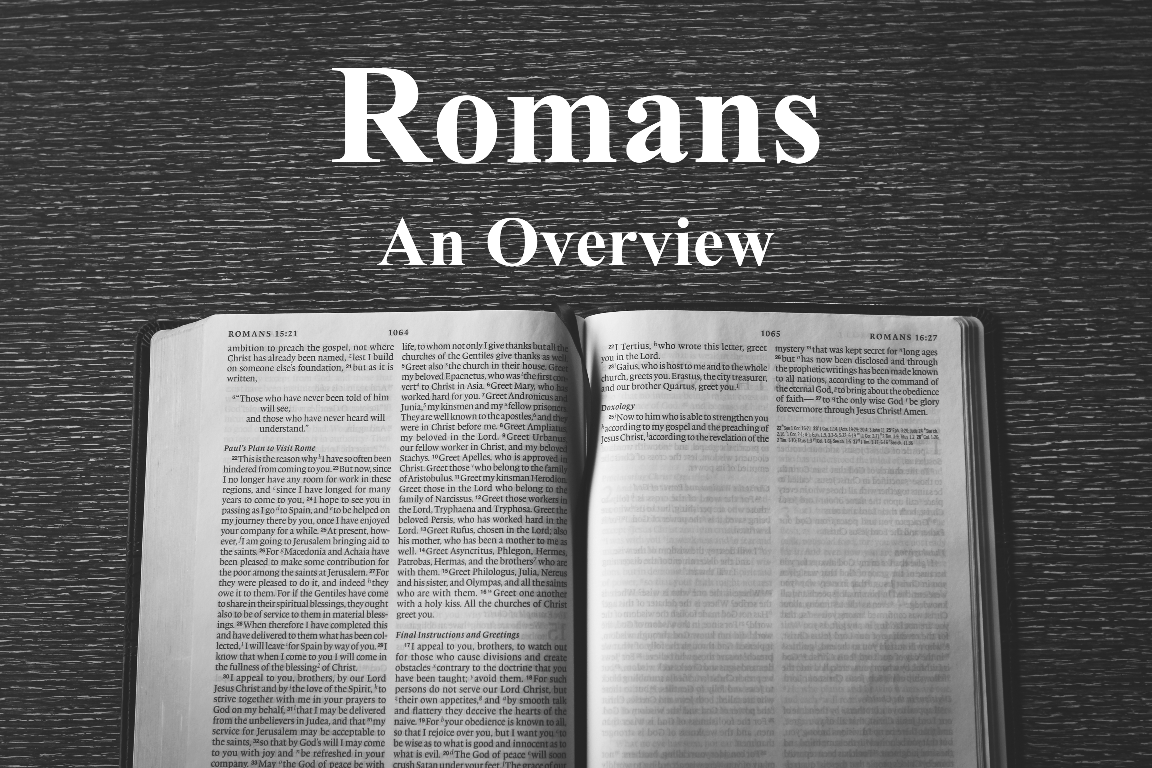
This is the first post in the Deeper series. I chose Romans as it is a great book to learn about theology, you can just call this book Paul's Systematic Theology. I will cover in some detail about resources that are helpful if you are just getting started with studying your Bible. I like this phrase "your Bible" as it reminds me how personable God's Word is to me, and you. Keep that in mind when you open your Bible, it's God's love story to you (this sounds corny but is very much true, John 3:16-17).
I will be using the S.O.A.P. Bible study method we diving deeper into the passages, and will add another post on how to use this study method, but the parts will be explained as they are used throughout the study.
Before diving into even one verse of Scripture, we need to get a lay of the land and determine the context of the verse or verses. To do this, we need to answer several questions that will help place us in the timeline and culture of the passage:
- Who wrote?
- Who was it written to? Specific person or persons, or a general audience?
- Why was it written? What is the audience not doing, should be doing, or doing wrong?
- When was it written? And maybe even where it was written, looking at you Paul.
- Are there any cultural, geographical, or historical markings or clues in the text?
- What are the major themes found in this book? Repeating words, clear theological or doctrinal terms, repeating ideas?
- What type of writing (genre) is the book? Does it have more than one?
There are several different ways to determine the context of a book of the Bible: reading the whole book and study it to understand, helpful summaries found in study Bibles and Bibles guides, or even video resources such as the Books of the Bible Overviews from the Gospel Project. Each method and resource has its usefulness and when just getting started it can be helpful to use more resources with the answer while you are learning how to study the Bible. Ultimately, you should be comfortable using Scripture to determine many of these answers.
You have to main options at this point. You can 1) read through the entire book at least twice (once straight through and then up to several times making notes), or 2) refer to other sources such as a study Bible introduction to get an idea of what the book is about. Some books are long, so find a good way to split it up and read it in chunks. Remember, this process isn't always done in a single sit down, in fact, this lesson on Romans will probably take several weeks to get through.
A few useful resources for determining a book's context are study Bibles as they typically contain an introduction, commentaries (Blue Letter Bible provides commentaries and various other resources), or visual resources such as the BibleProject.
Overview
Let's get into the context of the book of Romans. However you decided to get this information I will provide the scriptural references where applicable.
Who wrote it?
Paul, a servant of Christ Jesus, called as an apostle (Romans 1:1, CSB)
Well, that was easy. The first verse tells us who actually wrote it. If only all of our studies were this easy, but then where would the fun be (yes, this is supposed to be fun).
Who was it written to?
To all who are in Rome, loved by God, called as saints. (Romans 1:7, CSB)
Another easy one, Paul addresses all who are in Rome and all who are loved by God and called saints, that is all believers.
When was it written?
Our easy road has ended. So, how are we supposed to know when this book was written if Paul doesn't tell us? There are some contextual clues within the book to give us some indication on which frame of Paul's ministry timeline this book takes place.
In Romans 1:8-15, Paul expresses his eagerness to travel to Rome for his ministry. Then, in Romans 15:24, he mentions again visiting Rome but this time on the way to a future visit to Spain. Using these clues, we can conclude that Paul was most likely on his third missionary journey, putting the time frame around 56-58 AD. If your source provides a different date range but is still close, that is expected. While it is not exactly guessing, determining exact time lines can be an art more than a science. I'd say, getting down to within five years of the event is pretty accurate.
Now you are seeing why it is important to read the Bible as one continuous story (which it is, even the Old Testament).
What type of writing (genre) is it?
What even is a genre?
a category of artistic, musical, or literary composition characterized by a particular style, form, or content (Merriam Webster Dictionary)
Basically, it is a way of identifying the use and purpose of a writing. Romans is an epistle, or letter, and he wrote a lot of these. It is exactly what you would think about a letter today. He wrote it for a particular reason to a particular person or persons and then sent it off.
Some books can contain several genres within them. This is good to know because the genre provides some guidelines to the text on how to accurate and faithfully read it (you wouldn't take poetry literally but you would historical narrative).
Major themes found in this book?
The Righteousness of God (Romans 1:16-17, 3:21-26)
Justification by Faith and not Works (Romans 3:28, 4:3-5, 5:1)
Universality of Sin (Romans 1:18-32, 2:1-29, 3:10-23)
Grace and Salvation (Romans 3:24, 5:6-11, 6:23)
Life in the Spirit (Romans 8:1-4, 5-14, 26-27)
Role of the Law (Romans 3:20, 7:7-13, 8:3)
Israel and God's Plan (Romans 9:6-8, 10:9-13, 11:25-32)
Christian Living (Romans 12:1-2, 9-21, 13:1-7, 8-10)
God's Sovereignty (Romans 8:28-30, 9:19-23, 11:33-36)
Unity in Christ (Romans 10:12, 14:1-13, 15:5-7)